

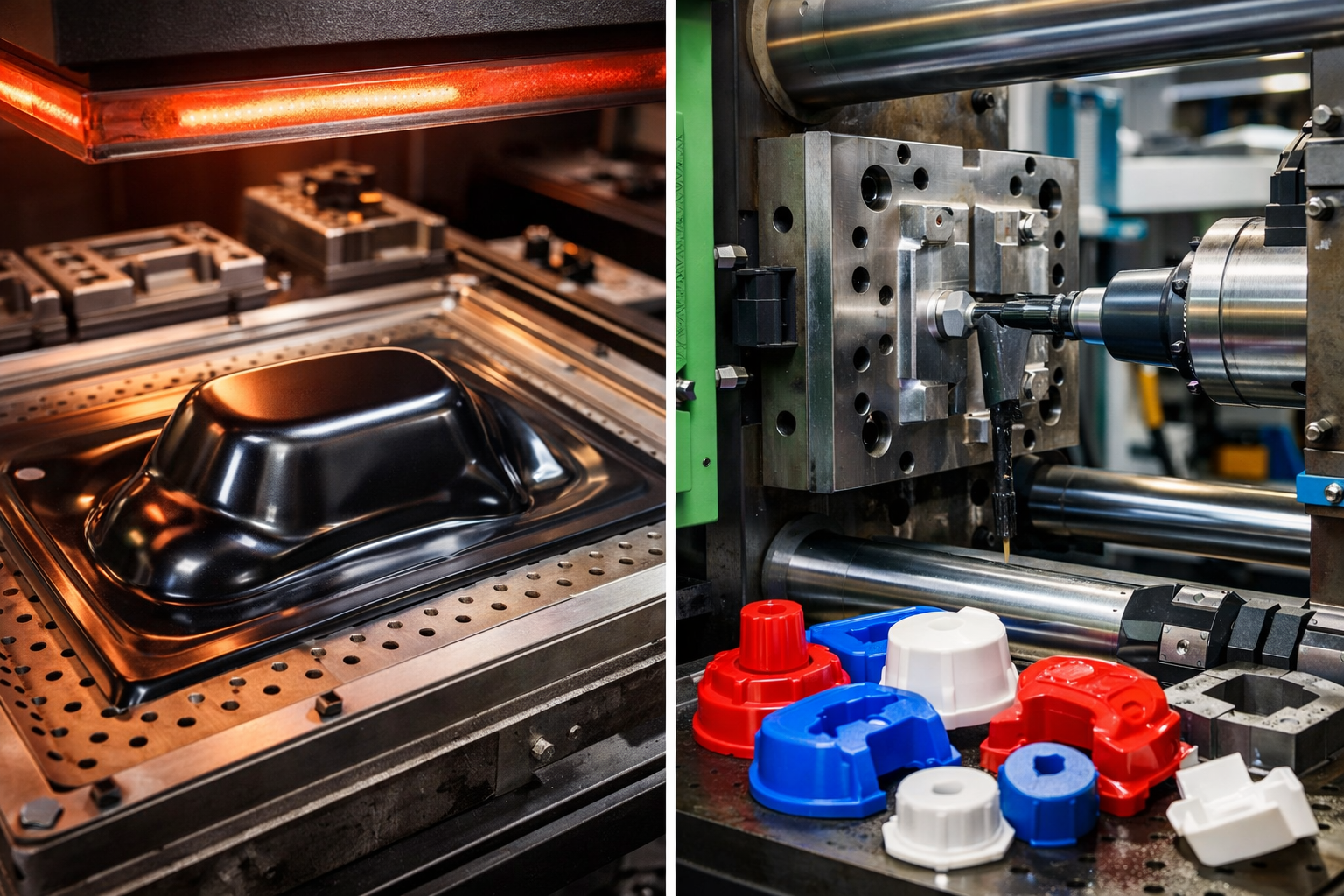
In the world of plastic manufacturing, selecting the right process is critical for achieving both quality and efficiency. Two of the most widely used plastic manufacturing methods are vacuum forming and injection molding. These processes are used extensively in various industries, from packaging and automotive to electronics and medical devices. However, each method comes with its own advantages and considerations. For businesses in Utah, particularly those located in regions like Orem, UT, understanding the differences between vacuum forming and injection molding can help in making an informed decision. This blog will explore the pros, cons, applications, and considerations of both methods to help you decide which is better suited for your next project.
Understanding Vacuum Forming
Vacuum forming is a type of thermoforming process where a plastic sheet is heated until it becomes pliable, then formed over a mold using vacuum pressure. This method is particularly popular for creating large parts with relatively thin walls, such as packaging trays, enclosures, and custom panels. In regions like Orem, UT, plastic vacuum forming is a cost-effective solution for industries looking for rapid prototyping or low-to-medium volume production.
One of the key benefits of vacuum forming is its simplicity and low tooling costs. Because the process involves heating and molding a single sheet of plastic, the molds used can be made from materials like wood, aluminum, or resin, significantly reducing initial investment. This makes it an attractive option for startups and small manufacturers who need to test designs before scaling up production. Additionally, vacuum forming offers quicker turnaround times, making it ideal for businesses that require rapid manufacturing in competitive markets like Utah.
However, vacuum forming does have its limitations. It is generally not suitable for creating parts with complex geometries or those that require high precision and consistency. The process may also lead to uneven wall thickness and limited detail in the finished product. Despite these challenges, vacuum forming remains a go-to method for many manufacturers in Utah who prioritize speed, cost-effectiveness, and versatility.
The Precision of Injection Molding
Injection molding is a more complex and highly precise plastic manufacturing method. It involves injecting molten plastic into a metal mold under high pressure. Once the plastic cools and solidifies, the mold opens and ejects the final product. Injection molding is ideal for high-volume production runs where part consistency, durability, and intricate design are crucial.
In Utah, injection molding is widely used in industries that demand accuracy and reliability, such as aerospace, automotive, and medical device manufacturing. The process can produce parts with tight tolerances, consistent quality, and complex features like threads, undercuts, and ribs. Additionally, a wide range of thermoplastics can be used in injection molding, offering manufacturers more material options to meet specific performance requirements.
Despite its advantages, injection molding comes with higher upfront costs due to the need for precision-machined steel or aluminum molds. These molds can take several weeks to manufacture and require a significant financial investment, which may not be feasible for small businesses or low-volume projects. However, once the mold is created, the per-unit cost decreases significantly as production volume increases. This makes injection molding a cost-effective solution for large-scale manufacturing.
Thermoforming vs Injection Molding: Key Differences
When evaluating thermoforming vs injection molding, it is essential to consider factors like production volume, design complexity, material requirements, and budget. Thermoforming, which includes vacuum forming, is best suited for simpler designs and lower volumes. Its low tooling costs and fast prototyping capabilities make it an excellent choice for businesses that need flexibility and quick market entry.
Injection molding, on the other hand, is designed for precision and high-volume production. The method allows for detailed part features and repeatability, which are critical for industries that cannot afford defects or dimensional inconsistencies. In terms of material options, injection molding offers greater flexibility and can accommodate advanced polymers that withstand high temperatures, chemicals, and mechanical stress.
Another difference lies in the aesthetic finish and structural integrity of the parts. Injection molded components often have a smoother surface and stronger mechanical properties compared to vacuum-formed parts. However, vacuum forming can still achieve professional results when used with high-quality molds and post-processing techniques like trimming and painting.
Manufacturers in Utah must weigh these differences carefully. For example, a company based in Orem, UT that produces custom enclosures for electronics may choose plastic vacuum forming due to the need for low production volumes and faster turnaround times. On the other hand, a larger manufacturer producing thousands of automotive components monthly may find injection molding more efficient and cost-effective in the long term.
Applications and Industry Use Cases
Both vacuum forming and injection molding are used across a variety of industries, but their applications differ based on the strengths of each method. Vacuum forming is commonly used in the production of packaging materials, food trays, medical device housings, point-of-sale displays, and custom panels. Its affordability and speed make it particularly popular among local businesses and product designers in Utah.
Injection molding, by contrast, is more prevalent in industries that require mass production and complex designs. Common applications include automotive interior and exterior parts, medical device components, consumer electronics casings, and industrial equipment parts. In Utah, many manufacturers rely on injection molding to meet the strict regulatory standards of aerospace and healthcare sectors.
Another area where vacuum forming shines is in product customization. Since the tooling is easier and cheaper to produce, design changes can be implemented quickly and at a lower cost. This is especially useful for product testing, marketing samples, and short-run product lines. Meanwhile, injection molding excels in situations where durability, dimensional accuracy, and performance are non-negotiable.
Choosing the Right Plastic Manufacturing Method in Utah
Selecting between vacuum forming and injection molding depends on your project’s specific needs. Consider your budget, design complexity, production volume, and timeline. For businesses in Utah, local access to skilled mold makers and plastic fabrication services can also influence the decision.
If you are a startup or small business in Orem, UT looking to bring a new product to market quickly, plastic vacuum forming might be the optimal solution. It offers fast prototyping, lower tooling costs, and flexibility for design iterations. This method allows you to test your concept in the real world without committing to high-volume production expenses.
On the other hand, if your goal is to manufacture large quantities of high-quality parts with tight tolerances and complex features, injection molding is the better choice. While the initial investment is higher, the long-term cost per part can be significantly lower, especially for runs in the thousands or more.
Furthermore, the availability of local suppliers and manufacturing partners in Utah who specialize in either vacuum forming or injection molding can streamline the production process. Working with experienced professionals who understand the nuances of each method ensures better outcomes and fewer setbacks.
Conclusion
Choosing between vacuum forming and injection molding involves more than just comparing costs. It requires a thorough understanding of each process’s capabilities, limitations, and suitability for your unique application. Whether you are developing a new product, scaling up production, or customizing a short-run order, your choice of plastic manufacturing method will directly impact the quality, efficiency, and success of your project.
In Utah, especially in areas like Orem, the decision often comes down to project size, speed, and precision. Plastic vacuum forming provides an agile, budget-friendly option for smaller batches and rapid prototyping. Injection molding offers the durability, consistency, and volume capacity needed for large-scale production. By evaluating your needs against these parameters, you can confidently choose the manufacturing method that aligns with your business goals and customer expectations.
Need a Plastic Fabrication Company Near You?
With over 35 years of hands-on experience in vacuum forming, fabrication, and custom plastic solutions, we are passionate about helping our customers succeed, no matter the size or stage of the project. From concept to completion, we work closely with you to create innovative, high-quality plastic products that meet your exact needs, because when our customers grow, we grow with them. Let us show you what is possible when experience, creativity, and commitment come together; contact us today!