

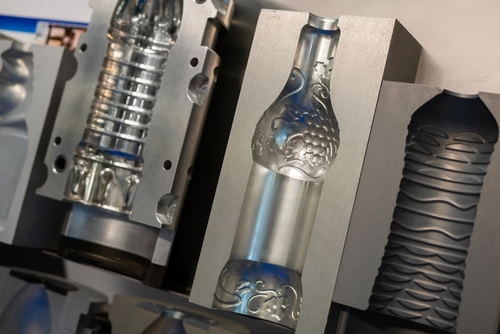
When you’re developing a new plastic product, one of the biggest decisions you will face is how it will be manufactured. For product designers, OEMs, small manufacturers, and startups across Orem, American Fork, Lindon, Pleasant Grove, and surrounding Utah communities, choosing between vacuum forming and injection molding can feel overwhelming. Both processes produce durable plastic components. Both can be cost-effective. Yet each serves very different production goals, budgets, and timelines.
The right choice depends on volume, complexity, tooling investment, and long-term scalability. Understanding how these two methods compare allows you to align your manufacturing strategy with your product’s real-world demands. With in-house vacuum forming and injection molding in Orem, UT, D&D Plastics helps businesses evaluate both options under one roof, making the decision clearer and more strategic from day one.
Understanding the Basics of Each Process
Before comparing costs and production volumes, it helps to understand how each method works.
Vacuum forming is a type of thermoforming process. A plastic sheet is heated until pliable, then formed over a mold using vacuum pressure. Once cooled, the shaped plastic is trimmed into its final configuration. Plastic vacuum forming in Utah is commonly used for enclosures, panels, trays, housings, and other parts where consistent wall thickness and moderate detail are required.
Injection molding works differently. Plastic pellets are melted and injected into a precisely machined mold under high pressure. Once the material cools and solidifies, the mold opens and releases the finished part. Injection molding in Utah is often chosen for complex geometries, tight tolerances, and high-volume production.
Both methods produce strong, reliable components. However, they differ significantly in tooling investment, turnaround time, and ideal production scale. The key is matching the process to your project’s scope.
Cost Considerations: Low Volume vs. High Volume
For many startups and small manufacturers, budget plays a major role in selecting a manufacturing method. Tooling costs are typically the first factor to evaluate.
Vacuum forming generally requires lower upfront tooling costs compared to injection molding. Because molds are less complex and less expensive to produce, plastic vacuum forming in Utah can be an attractive solution for low to medium production runs. If you are launching a new product and want to test the market before committing to high volumes, vacuum forming often provides the flexibility you need without a significant financial barrier.
Injection molding, on the other hand, involves higher initial tooling expenses. Molds must withstand high pressure and are typically machined from durable metals. However, once tooling is complete, per-part costs drop significantly at higher volumes. For large production runs of thousands or tens of thousands of units, injection molding in Utah becomes extremely cost-effective.
D&D Plastics works closely with clients to compare projected production quantities and determine the break-even point between the two methods. Their in-house capabilities allow for transparent cost comparisons so businesses can make informed decisions rather than guessing which path is more economical.
Design Complexity and Material Considerations
Another critical factor is part complexity. Injection molding excels at producing intricate details, internal features, snap fits, and tight tolerances. If your product requires complex geometries or precise mechanical functionality, injection molding in Utah may be the stronger option.
Vacuum forming, while versatile, is generally better suited for larger, less intricate components. It performs exceptionally well for parts like equipment covers, dashboards, packaging inserts, and protective housings. When wall thickness consistency and lightweight construction are priorities, thermoforming services in Utah offer a practical solution.
Material availability also influences your choice. Vacuum forming relies on plastic sheet stock, and having raw sheet availability on hand can reduce lead times significantly. D&D Plastics maintains access to a wide range of plastic sheet materials, allowing for flexibility in thickness, color, and performance characteristics.
Injection molding uses pelletized resins, offering an equally broad range of material options including high-strength engineering plastics. The decision often comes down to how the material must perform in its intended environment. For OEMs developing industrial equipment or consumer products, selecting the right resin or sheet stock is just as important as choosing the manufacturing method.
Prototyping and Product Development Flexibility
Speed to market matters, especially for startups and product designers testing new concepts. Prototyping plays a major role in refining designs before full production begins.
Vacuum forming often allows for quicker prototype turnaround times due to lower tooling complexity. Adjustments to molds can be made more efficiently, making it easier to iterate on design changes. For early-stage product development, vacuum forming in Orem, UT can provide a faster path from concept to physical sample.
Injection molding prototypes may require more investment upfront, particularly if production-grade tooling is involved. However, for products intended for high-volume distribution, developing a prototype through injection molding ensures that the test units accurately reflect final production quality.
D&D Plastics supports both approaches with in-house prototyping capabilities. This integrated model allows businesses in American Fork, Lindon, Pleasant Grove, and surrounding areas to refine designs, evaluate fit and function, and transition smoothly into production. Instead of outsourcing multiple stages to different vendors, clients can collaborate with a single team that understands the entire life cycle of their product.
Scalability and Long-Term Manufacturing Strategy
When comparing vacuum forming and injection molding, it is important to think beyond immediate needs. Where do you expect your product to be in 12 months? In 5 years?
If your initial demand is modest but expected to grow steadily, starting with plastic vacuum forming in Utah may allow you to enter the market quickly while minimizing risk. As volume increases, transitioning to injection molding could reduce long-term per-unit costs. Having access to both processes under one roof makes that transition far more seamless.
For products that require immediate large-scale production, injection molding in Utah often provides the efficiency and repeatability necessary for consistent output. High-pressure molds deliver uniform parts at rapid cycle times, making them ideal for sustained high-volume manufacturing.
D&D Plastics offers custom molded plastic parts in Orem and evaluates each project with scalability in mind. Their team considers production forecasts, material performance, and long-term cost implications to recommend the most strategic path forward. Because they provide both thermoforming services in Utah and injection molding, their recommendations are based on what genuinely benefits the client rather than steering projects toward a single capability.
Serving communities including Orem, American Fork, Lindon, and Pleasant Grove, D&D Plastics combines local accessibility with comprehensive manufacturing expertise. Their raw sheet availability supports fast vacuum forming turnaround times, while their injection molding capabilities handle complex and high-volume demands.
Making the Right Choice for Your Utah Project
There is no universal answer when it comes to choosing between vacuum forming and injection molding. The best solution depends on your product design, production volume, budget, timeline, and growth projections.
Vacuum forming in Orem, UT offers lower upfront tooling costs and flexibility for low to medium production runs. It is well-suited for larger components, protective housings, and projects where quick iteration matters. Injection molding in Utah delivers precision, durability, and cost efficiency for high-volume production and complex parts.
By working with a partner that offers both plastic vacuum forming and injection molding under one roof, you gain clarity. You can compare real numbers, evaluate prototypes, and plan for scalability without juggling multiple suppliers. D&D Plastics provides that comprehensive support, helping product designers, OEMs, and startups move from concept to production with confidence.
If you are developing custom molded plastic parts in Orem or anywhere in Utah County, taking the time to evaluate both methods carefully will protect your investment and streamline your path to market. With experienced guidance, transparent cost comparisons, and in-house manufacturing capabilities, your project can move forward with the right process from the very beginning.