

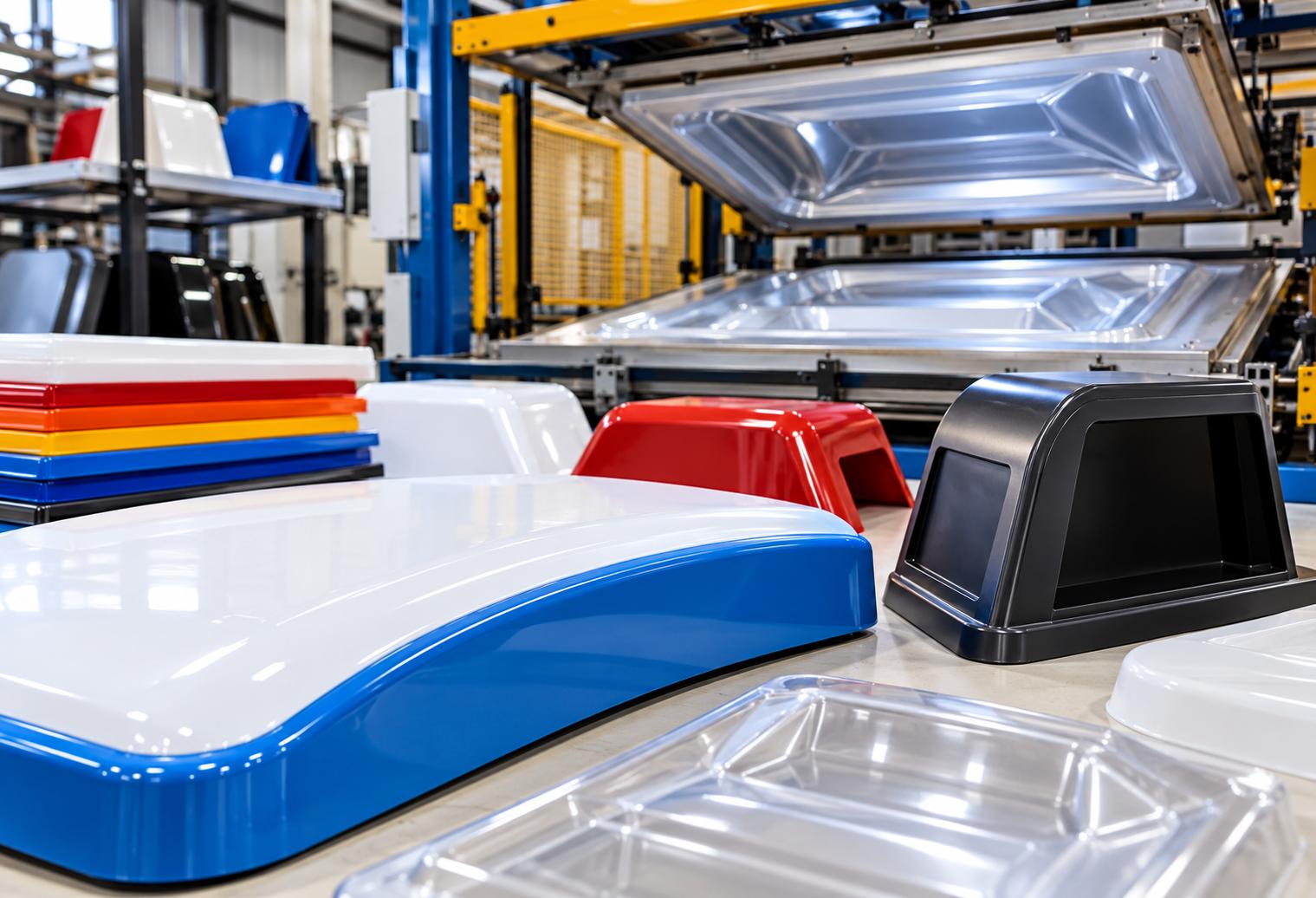
Commercial signage and displays need to do more than attract attention. For businesses in Orem, UT, creating a recognizable brand presence means choosing materials and designs that work in busy retail environments while accounting for Utah’s changing weather conditions. Custom vacuum forming gives local businesses a way to create dimensional signage, branded display components, and distinctive plastic features that standard flat materials may not provide.
Quick answer: Custom vacuum forming benefits Utah commercial signage and display projects by allowing businesses to create three-dimensional shapes, raised lettering, molded logos, and customized display components. The process uses heat and vacuum pressure to shape plastic sheets around a mold, producing designs that can be repeated for multiple locations or installations. With appropriate materials and planning, vacuum-formed components can support outdoor signage, indoor merchandising, and branded commercial environments throughout Utah County.
What local businesses should know
-
Custom vacuum forming can create dimensional sign faces, curved panels, molded logos, and other branded plastic components.
-
Commercial properties along Orem’s State Street and University Parkway corridors can use dimensional signage to distinguish storefronts in busy retail settings.
-
Utah’s intense summer sunlight and winter conditions make outdoor material selection particularly important.
-
Using a reusable mold can help businesses maintain consistent shapes across multiple displays or locations.
-
Custom plastic fabrication can complement vacuum forming when a project needs trimming, mounting features, or additional components.
These benefits are especially relevant in Utah Valley, where retail stores, restaurants, offices, and commercial facilities often need signage that balances appearance with practical performance.
At D&D Plastics, we provide custom plastic design, vacuum forming, thermoforming, and fabrication services from our Orem location. Our goal is to help customers evaluate the shapes, materials, and production methods that fit their projects.
Local Data and Practical Considerations for Utah Signage
Commercial signage projects in Orem require attention to both material performance and applicable local sign regulations. The City of Orem Planning Division provides sign regulations and a sign-zone map, while technical guidance published through the International Association of Plastics Distribution emphasizes UV protection and material thickness when thermoforming plastic for outdoor applications.
For businesses planning exterior signage, these considerations influence project decisions before manufacturing begins.
Commercial sign projects should account for:
-
Approved sign dimensions, placement, and applicable zoning requirements.
-
UV exposure on south-facing and west-facing building elevations.
-
Wind, winter snow, and seasonal temperature changes along the Wasatch Front.
-
Material thickness, mounting compatibility, and the depth of molded shapes.
-
Whether components require lighting, graphics, or additional fabrication.
Local sign requirements vary by jurisdiction and project. Businesses should confirm applicable approvals with their city and coordinate structural and electrical requirements with qualified signage professionals.
How Custom Vacuum Forming Impacts Local Commercial Projects
Custom vacuum forming benefits Utah Valley businesses by turning flat plastic sheets into shaped components that create visual depth, accommodate unique spaces, and support consistent branding. For stores, restaurants, and commercial facilities, these capabilities can make signage and product displays more distinctive without requiring every shaped element to be assembled from numerous separate pieces.
Dimensional branding: Raised letters, molded logos, and contoured sign faces can add depth to a building’s visual identity.
Customized merchandising: Retailers can develop shaped display trays, product holders, and decorative fixtures that complement specific products.
Repeatable production: A reusable mold allows businesses with locations in Provo, Lindon, and Pleasant Grove to produce similarly shaped components.
Material flexibility: Acrylic, polycarbonate, and ABS offer different characteristics for transparency, impact resistance, appearance, and fabrication.
The correct material and manufacturing approach depend on whether the component will be installed indoors, exposed to weather, illuminated, or handled frequently.
Warning Signs That Standard Signage or Displays May Not Be Enough
Standard signage and display products may fall short when they cannot achieve the required shape, fit the available space, or consistently represent a business’s visual identity. For commercial projects throughout Utah County, recognizing these limitations early can prevent unnecessary redesigns and help determine whether custom vacuum forming is worth considering.
Look for these six indicators:
-
Flat signage lacks the desired depth. A dimensional logo or molded sign face would better suit the building’s design.
-
Standard displays leave unused space. Off-the-shelf fixtures do not accommodate the products or available footprint.
-
Existing plastic panels show damage. Cracking, discoloration, or distortion suggests the materials or installation conditions need review.
-
Multiple locations require matching components. Repeated manual fabrication makes visual consistency difficult.
-
Complex shapes require excessive assembly. A molded component could potentially replace several joined pieces.
-
New branding needs a custom profile. Standard rectangular or flat panels cannot reproduce the intended appearance.
These signs do not automatically mean vacuum forming is the best solution. They indicate that the project would benefit from a professional review of its design and manufacturing options.
When to Call a Custom Vacuum Forming Professional
A custom vacuum forming professional should be consulted when commercial signage or display components require shaped plastic, specialized dimensions, material guidance, or repeat production. Businesses in Orem can benefit from discussing these requirements before finalizing artwork, ordering raw materials, or committing to an installation schedule.
Useful information to prepare includes the proposed dimensions, sketches or design files, intended environment, quantity, color requirements, and project deadline.
We can help evaluate whether vacuum forming, plastic fabrication, or another available manufacturing process is appropriate. Exterior mounting, electrical work, and municipal approvals should also be reviewed with qualified professionals responsible for those parts of the project.
Common Local Causes of Signage and Display Problems
Commercial signage and display problems in Utah Valley often begin with material choices, installation planning, or design specifications that do not fully reflect the intended environment. Understanding these challenges helps businesses make better decisions before investing in molds, production materials, and finished components.
1. Sunlight and UV exposure
Outdoor signs near American Fork, Vineyard, and surrounding communities experience prolonged sun exposure during warmer months. Plastic used outdoors should be evaluated for suitable UV protection and long-term weatherability.
2. Winter weather and temperature changes
Cold weather, snow, and temperature fluctuations create additional demands on exterior sign assemblies. Proper fastening, clearances, and material compatibility help account for expansion, contraction, and potential physical stress.
3. Inadequate design allowances
Deeply formed sections can become thinner than the original sheet. Tool design, corner radii, draw depth, and starting thickness all affect the finished component.
4. Inconsistent production specifications
Businesses expanding to multiple Utah locations may encounter differences between displays when dimensions, finishes, or graphics are not standardized.
Addressing these factors during design is generally more practical than correcting problems after installation.
Prevention and Maintenance for Vacuum-Formed Signage
Protecting vacuum-formed signage begins with proper material selection, installation planning, and routine inspections. For Utah commercial properties, a simple maintenance schedule can help identify visible damage, loose components, and surface deterioration before these conditions interfere with appearance or normal use.
During spring, inspect exterior signs for damage that may have developed during winter. After summer’s strongest periods of sun exposure, look for discoloration, surface changes, or distortion.
For indoor retail displays, periodically check high-contact areas, attachment points, and frequently cleaned surfaces.
Use cleaning products recommended for the specific plastic, and avoid abrasive tools or unapproved solvents. Leave elevated sign repairs, electrical components, and structural mounting issues to qualified professionals.
Expected Results From Custom Vacuum Forming
Custom vacuum forming can provide shaped, repeatable plastic components with a degree of design flexibility that flat-sheet fabrication alone cannot always achieve. For Utah businesses, realistic results include dimensional sign faces, consistent molded elements, and custom display parts designed around specific space and branding requirements.
The process generally involves reviewing a design, selecting a material, creating or preparing a mold, heating and forming the plastic, cooling the part, and trimming excess material.
We can discuss prototype and production options based on project requirements.
Finished appearance, tolerances, durability, and production cost will depend on the design, mold, selected plastic, and finishing needs. Vacuum forming does not automatically make every plastic suitable for exterior use.
Common Mistakes in Commercial Signage Projects
The most avoidable commercial signage mistakes involve ordering materials before confirming design requirements, assuming all plastics perform alike, or overlooking how molded components will be installed. For businesses throughout Utah County, addressing these issues before manufacturing can reduce rework and unnecessary expenses.
Mistake: Choosing plastic based only on appearance.
Consequence: The material may not provide the required outdoor performance, impact resistance, or lighting characteristics.
Better approach: Match the plastic specification to the sign’s actual environment and intended use.
Mistake: Overlooking mold and prototype requirements.
Consequence: A design may require changes after tooling has already been created.
Better approach: Review dimensions, draw depth, quantity, and sample requirements before production.
Mistake: Finalizing signage without checking local requirements.
Consequence: A completed sign may require modification to meet applicable placement or dimensional restrictions.
Better approach: Coordinate municipal sign reviews and installation planning before manufacturing the finished components.
Common Local Scenario: A Utah Valley Retail Branding Project
A common local scenario involves a retailer planning a new storefront display near University Place in Orem while preparing matching branded elements for locations in Lindon and Provo. The business wants raised plastic logos, coordinated product displays, and consistent design details across its locations.
Instead of independently fabricating every curved component, the business could evaluate a custom mold for repeatable plastic pieces.
The planning process would include checking the design dimensions, evaluating indoor versus outdoor materials, reviewing the proposed production quantities, and determining whether vacuum forming offers a practical manufacturing approach.
This is an illustrative scenario, not a claim about a completed customer project.
Related Custom Plastic Design and Fabrication Solutions
Custom vacuum forming works best when it is considered alongside the other plastic design and fabrication processes a project may require. For Utah commercial signage and displays, these services can help turn an initial branding concept into functional plastic components with suitable shapes, dimensions, and finishes.
Our related capabilities include:
-
Vacuum forming and thermoforming: Creating shaped plastic components using heat and molds.
-
Custom plastic design: Developing project concepts and specifications around intended uses.
-
Plastic fabrication: Producing, cutting, and assembling plastic features and components.
-
Custom plastic display cases: Creating protective and presentation-focused enclosures for commercial settings.
-
Plastic material selection: Evaluating acrylic, polycarbonate, ABS, and other options according to project requirements.
The right combination depends on whether the project involves a formed sign face, dimensional logo, shaped merchandising component, or an enclosed display.
Have a concept that requires more than a flat plastic panel? We can help review the possibilities.
Comparing Your Commercial Signage and Display Options
The best manufacturing method depends on a project’s shape, quantity, budget, appearance, and installation requirements. For businesses choosing signage or merchandising displays in Utah Valley, comparing vacuum forming with flat-sheet fabrication and other molding processes can clarify where each approach offers value.
Flat plastic fabrication
Best suited for straightforward panels, simple lettering, and components that can be cut or assembled from flat sheets. It may be economical for simple one-off pieces.
Custom vacuum forming
Best suited for curved profiles, raised sign faces, branded shapes, and components requiring repeatable dimensional forms. Custom mold costs should be considered, especially for small quantities.
Injection molding
May suit smaller, more detailed parts produced in sufficient quantities to justify more involved tooling.
Custom fabricated display cases
Often appropriate when transparent enclosures, access doors, protective covers, or specialized display dimensions are the primary concern.
For commercial signage, selecting the most elaborate process is not necessarily the best decision. The goal is to choose a method that achieves the required result without unnecessary manufacturing complexity.
Service Areas for Custom Plastic Projects
Based in Orem, we work with customers planning custom plastic projects throughout Utah County and nearby communities, including Lindon, Pleasant Grove, American Fork, Provo, Vineyard, and Spanish Fork. Our vacuum forming and plastic fabrication services also support project needs in other parts of the Wasatch Front.
The Cost of Overlooking Custom Fabrication Options
Overlooking custom fabrication options can lead to unnecessary assembly work, poorly fitting displays, inconsistent branded components, and potential replacement expenses. For Utah businesses managing storefront upgrades or coordinated rollouts, these costs can become more significant when the same design problem affects multiple locations.
Custom vacuum forming is not always the least expensive choice, particularly when a project requires a new mold for a single piece. However, evaluating it early can reveal opportunities to improve design consistency or simplify production.
If your commercial display project is approaching a production deadline, reviewing materials and specifications before fabrication can help reduce avoidable changes.
Frequently Asked Questions About Custom Vacuum Forming in Utah
Utah business owners commonly ask how vacuum forming affects sign durability, manufacturing costs, design flexibility, and local compliance. The following answers address practical considerations for commercial signage and display projects.
Is custom vacuum forming suitable for outdoor commercial signs in Orem?
Yes, custom vacuum forming can be used to manufacture outdoor commercial sign faces when appropriate plastics and design specifications are selected. UV protection, temperature changes, mounting requirements, and material thickness should all be considered. Businesses should also confirm that the completed sign design complies with applicable municipal regulations.
How does Utah County’s climate affect vacuum-formed plastic signs?
Utah County’s climate exposes exterior signage to strong sunlight, seasonal heat, freezing temperatures, and winter precipitation. These conditions make material selection and installation design important. UV-protected plastics, appropriate mounting methods, and periodic inspections can help support a sign’s performance, although the expected lifespan varies by application.
Can vacuum forming create three-dimensional business logos?
Yes, vacuum forming can produce raised logos, curved surfaces, and dimensional sign faces by shaping heated plastic around a mold. The achievable detail depends on the design, material, tooling, and forming method. Very intricate features may require a different process or additional fabrication to achieve the intended appearance.
Is vacuum forming cost-effective for businesses with multiple locations in Provo and Lindon?
Vacuum forming can be cost-effective for repeated components because the same mold may be used to produce multiple similarly shaped pieces. Businesses with several locations can benefit from consistent dimensions and appearance. Overall cost depends on mold development, component size, quantity, materials, and finishing requirements.
How much does custom vacuum forming cost in Orem?
Custom vacuum forming costs in Orem depend on the size and complexity of the part, material type, mold requirements, and production quantity. A simple component may have different tooling and finishing needs than an illuminated sign face or large commercial display. A project-specific quote is the most reliable way to establish pricing.
What is the difference between vacuum forming and plastic fabrication?
Vacuum forming shapes a heated plastic sheet against a mold using vacuum pressure. Plastic fabrication is a broader category that includes processes such as cutting, joining, bending, and assembling plastic. A commercial sign or display project may use both methods to create the required formed features and finished assembly.
How long do vacuum-formed commercial signs last in Utah Valley?
The lifespan of a vacuum-formed sign depends on its material, UV protection, thickness, installation, exposure, and maintenance. Indoor displays generally face different conditions than exterior building signs. Choosing a plastic designed for the intended environment and following appropriate maintenance practices can help reduce premature deterioration.
What should I prepare before requesting a custom vacuum forming quote?
Prepare the approximate dimensions, intended use, quantity, design drawings or sketches, material preferences, and desired completion timeframe. For Utah commercial signage, indicate whether the component will be installed outdoors, illuminated, or attached to an existing sign structure. These details help determine suitable manufacturing options and pricing.
Build More Distinctive Commercial Signage in Utah Valley
Custom vacuum forming gives Utah businesses a practical way to explore dimensional branding, specialized plastic components, and repeatable commercial display designs. By matching the manufacturing method to the project’s environment, appearance, and production needs, businesses can make better-informed decisions about their signage investments.
Create custom signage and displays that fit your business
From early design considerations to vacuum forming and plastic fabrication, we can help you explore solutions for your commercial project in Orem and the surrounding Utah Valley communities.